Like the Himalayas remember snow, Kashmir remembers its women poets — not because they sought remembrance, but because something within them refused silence. Centuries later, Habba Khatoon and Lalla Ded remain alive as voices: one aching, one uncompromising — still debating how a life should be lived.
Habba Khatoon’s poetry is steeped in love and separation. It speaks from within the world — marriage, longing, loss — naming suffering without attempting to escape it. Lalla Ded’s vaakhs do something more dangerous. They do not describe pain; they dismantle the structures that create it.
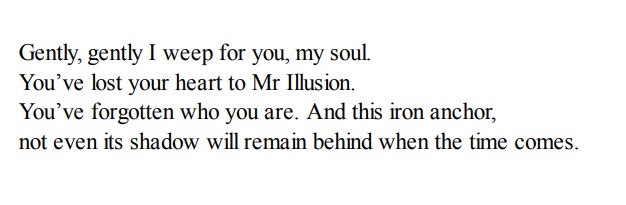 Lal ded's Poem
Between them lies a question Kashmir — especially its women — still inhabits:
Is a meaningful life lived by enduring suffering with wisdom, or by rejecting the very institutions that make suffering inevitable?
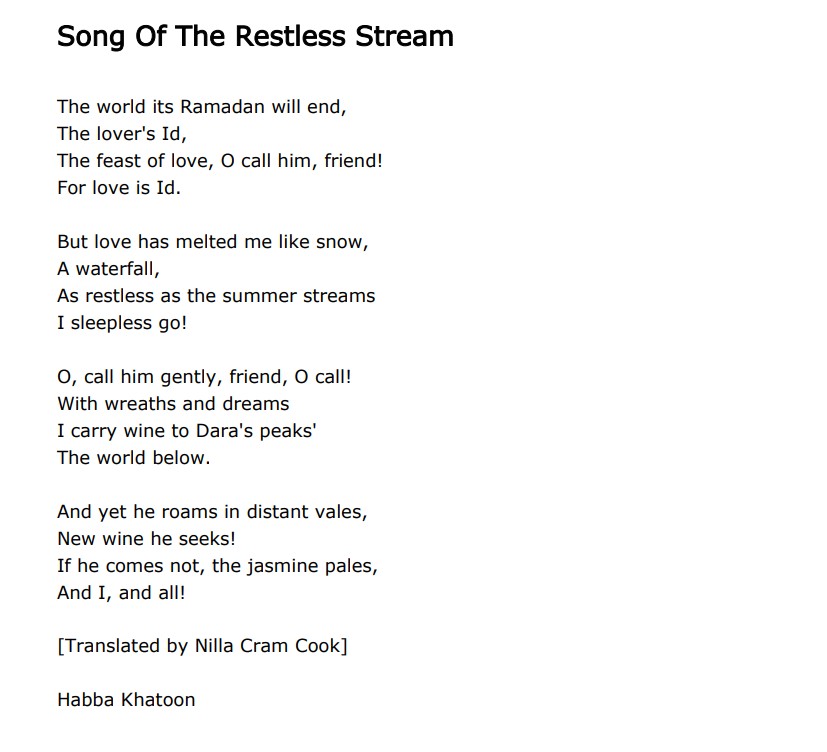
Lalla Ded warns that worldly attachments entrap us, that belonging itself can become a form of deception. Habba Khatoon does not warn. She waits. She yearns. She stays awake through the night because love has not returned.
One urges transcendence; the other endures.
One strips the world bare; the other is shaped by it.
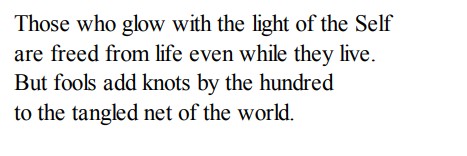 Lal ded's verse
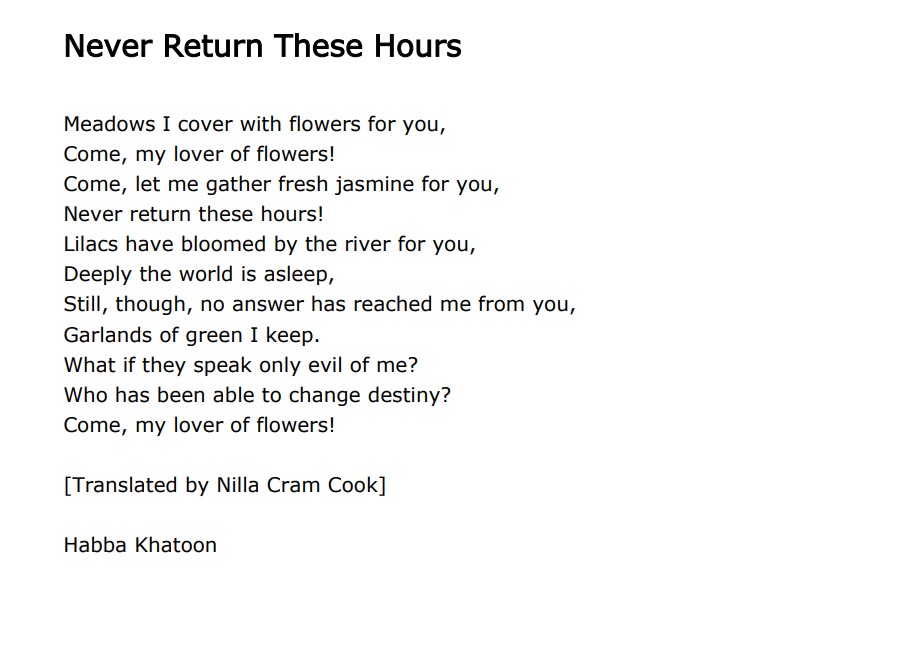
Reading both raises unsettling questions. Can one rise above belonging — or is belonging the point of being alive? Can divine love replace human bonds? If it can, why were hearts made to ache and remember? If it cannot, why do these bonds so reliably end in loss?
The same loss can deepen one life and destroy another. Perhaps capacity decides fate.
Habba Khatoon lived fully within society. Born Zoon into a poor peasant family in sixteenth-century Chandhara village, she was largely self-taught, learning poetry from rivers, birds, flowers, and sky. Married young to an abusive husband, she did what was unthinkable for her time — she left.
Her verses later reached Yousuf Shah Chak, the last independent ruler of Kashmir. They married, and she became queen. It was brief. In 1586, the Mughal emperor Akbar annexed Kashmir. Yousuf Shah Chak was arrested and exiled to Bihar.
Habba Khatoon was left behind — no longer queen, no longer commoner, suspended in a life that could not be returned.
She never saw him again.
From that moment onward, her poetry became a chronicle of waiting without closure — grief shaped not only by love but by history itself.
I remain awake, awake through the night.
In the dark, my heart keeps burning.
The one who was my breath has gone far away.
There is no sermon here. Only the honesty of pain that refuses decoration.
Lalla Ded stands elsewhere entirely.
A fourteenth-century mystic and philosopher, she rejected domestic life, ritual obedience, and social identity. She wandered naked, homeless, unattached — not as provocation, but as consequence.
Her words confront:
Shiva is within you — why search outside?
The dwelling of the Lord is inside your own being.
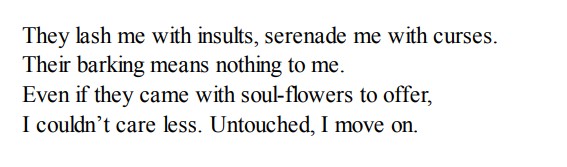 Lal Ded's Verse
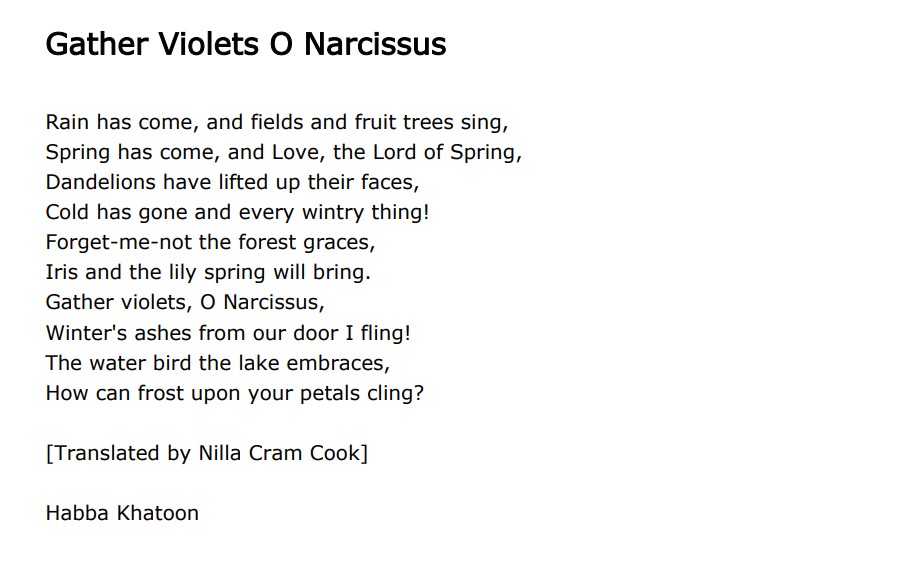
Habba Khatoon begins with emotion and arrives at meaning.
Lalla Ded begins with truth and strips emotion until nothing false remains.
Habba mourns love’s absence.
Lalla questions attachment itself — seeing it as another form of bondage.
Habba Khatoon’s resistance is emotional honesty: this pain exists, and I will not lie about it.
Lalla Ded’s resistance is refusal: I owe the world nothing.
One sings.
One speaks.
One waits.
One walks.
In metaphor, Habba Khatoon is Kashmir crying softly at night.
Lalla Ded is Kashmir asking unbearable questions in daylight.
Neither cancels the other.
Habba says: I burn because love left.
Lalla answers: You burn because you are looking in the wrong place.
Society embraced Habba Khatoon more easily. Her suffering could be aestheticised — turned into song, shawl, nostalgia. She became the eternal lover, grief made beautiful, safe to mourn without challenging power.
Lalla Ded was harder to contain. She questioned religion, patriarchy, caste, and ritual. She belonged to no institution — which is why institutions remember her selectively.
Yet her words travelled far beyond solitude. Legend says that Nund Rishi, Kashmir’s patron saint, refused to suckle as an infant until Lalla Ded spoke:
You were not ashamed of being born — why then of suckling?
Her truth did not comfort; it awakened. Nund Rishi later translated her radical freedom into compassion and community — making what was unbearable for most people livable.
Her vaakhs remain relentless:
What good are fasting and prayer
if your heart is still filthy?
She offered — especially to women — permission to ask forbidden questions:
What if I leave?
What if I do not endure?
What if I owe nothing?
Habba Khatoon, by contrast, lives within endurance. She does not escape grief; she inhabits it until it becomes language.
Modern Kashmir lives closer to Habba Khatoon. It is a land of waiting, separation, unfinished love — people taken away and not returned, lives suspended without answers. When wounds are open, people reach for Habba, not Lalla.
Habba is the voice you hear when you cannot sleep.
Lalla is the voice you hear when you are ready to walk away.
Habba Khatoon is loved because she suffered beautifully.
Lalla Ded is tolerated because she refused to suffer at all.
Between them lies the unresolved question they leave behind:
Is it better to lose love and be free — or to keep love and be broken?
Peace teaches truth.
Pain sings.
And so Kashmir lives — not choosing between them, but moving between nights of waiting and days of refusal — still listening to both, because neither path has ever been enough on its own.